Analytics Application
Overview Course Expectations ▸
A Business Problem Addressed by Deep Learning-Based Predictive Models
I work as a campaign manager for search engine marketing, building paid search strategies that deliver leads or sales for clients across several industries. My recurring problem is client churn, accounts that cancel before their campaigns have had time to work. At least five of my own clients have cancelled, and since I am one of several campaign managers, the company-wide number is much higher. Some leave because they expect immediate results and do not feel the fees are paying off. Others fall behind on management and platform fees until the account goes to collections. One we dropped ourselves, after learning that the client's business was scamming the people our campaigns brought in. My manager has observed that most clients cancel within three to six months if they have not seen results, which matches my own experience.
Looking back, churn is rarely a surprise. An account that cancels in month five has usually been slipping since month two, cost per lead creeping up, meetings postponed, emails answered more slowly, invoices paid later. The warning signs exist, but they sit separately in the ad platforms, the billing system and our inboxes, and nobody reviews them together. The loss is also larger than the remaining contract value. The audit, keyword research, campaign build and early media spend all happen at the start, so a client who leaves at month four never stays long enough to pay them back. Zhong and Zhuang cite Bain & Company and Earl Sasser, who found that raising retention by five per cent can lift profits by twenty-five to ninety-five per cent.
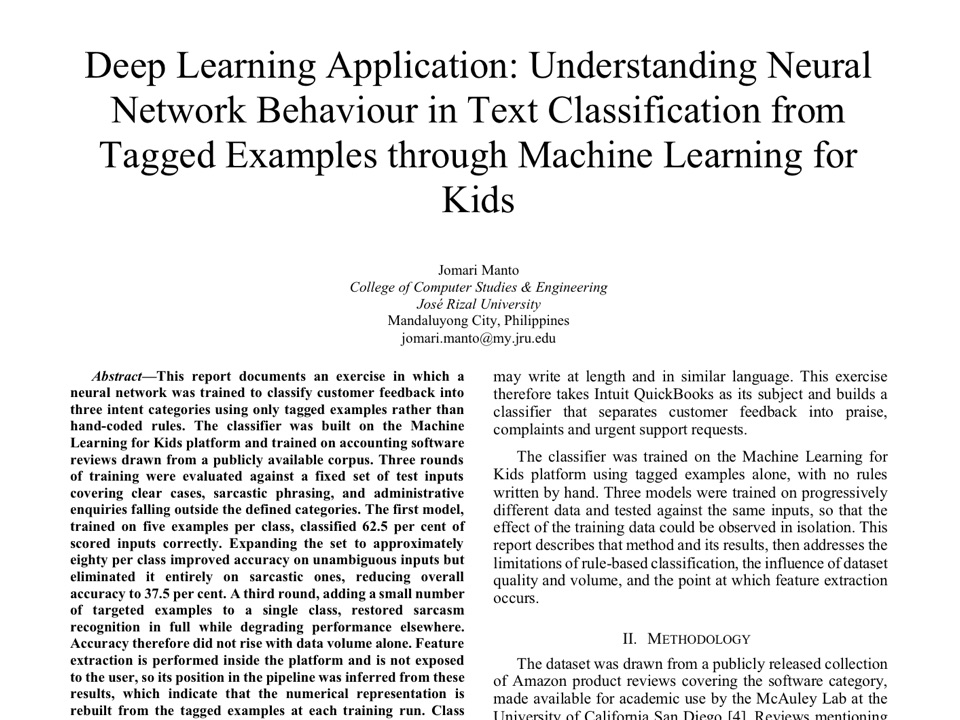
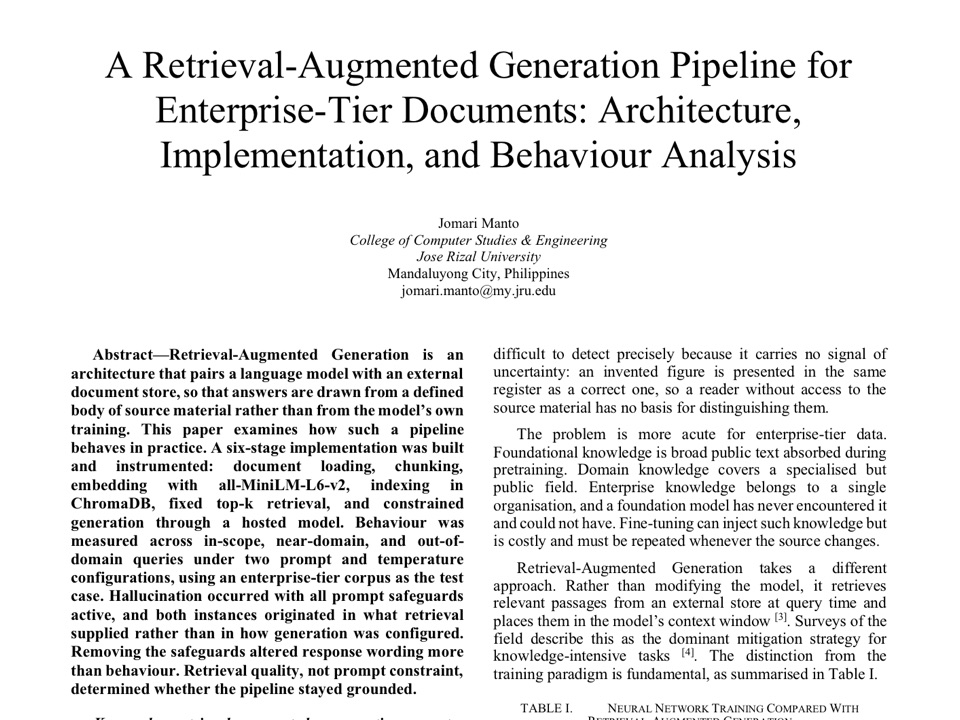
Deep learning could turn this into a prediction. Trained on the agency's record of closed accounts, a model could estimate each week how likely an account is to cancel within the next two to three months, using campaign performance, tenure, payment history, meeting attendance and client emails. Zhong and Zhuang explain that recurrent neural networks memorise data entered earlier in order to predict what comes next, which is exactly what this problem needs: a client whose cost per lead has climbed steadily since month two is a different risk from one that has held flat, and only a model that remembers the earlier months can separate them. Bahja supplies the other half, natural language processing converts unstructured text into structured data, so sentiment analysis of client emails could pick up dissatisfaction before it is ever stated directly.
The main drawback is that deep learning is a black box. Zhong and Zhuang admit the model cannot give reasons for its results, which for us is a practical problem rather than a theoretical one: an account manager told that a client is at seventy-eight per cent risk cannot act on the number without knowing what caused it, since the right response depends on the cause. Methods such as SHAP show which factors pushed a particular score up, so the flag arrives with an explanation attached. Comparing the model against a simpler, readable one tests whether the added complexity is worth the lost clarity. Uncertain predictions should also go to a person first, the way DigitalGenius's CoPilot releases confident answers on its own but sends the rest to staff for approval. Trust then builds from checking whether the flagged accounts actually leave.
Bahja, M. (2020). Natural Language Processing Applications in Business. In E-Business, Higher Education and Intelligence Applications. IntechOpen.
Zhong, Z., & Zhuang, X. (2018). Deep Learning Applications in Business Activities. American Journal of Management Science and Engineering, 3(5), 38-43.
Advanced NLP and Context-Aware Conversational Systems
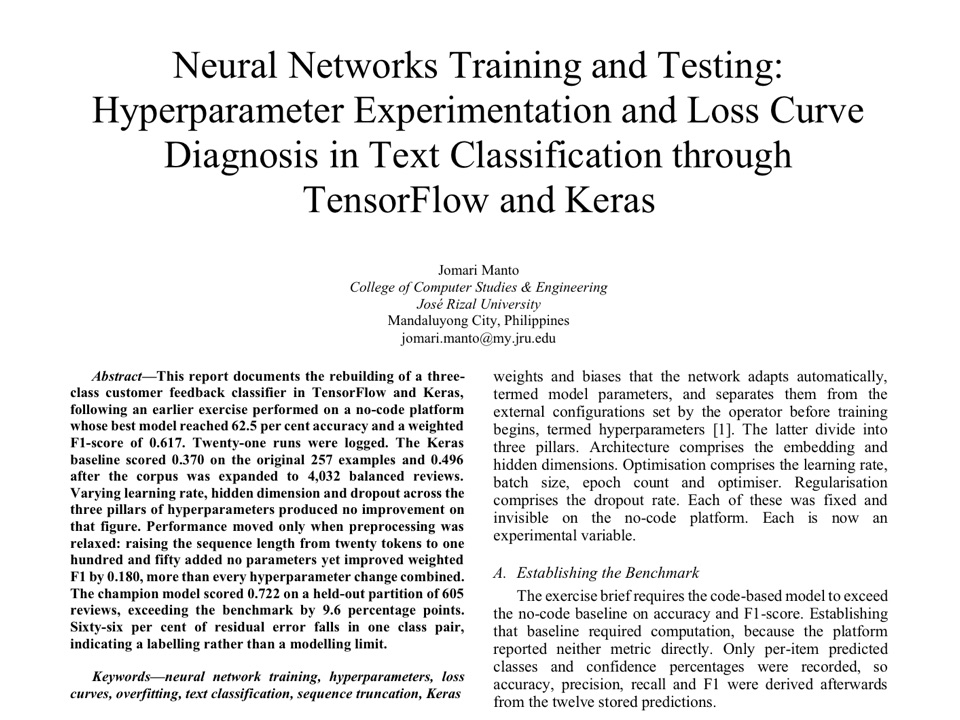
The clearest example I can give comes from using large language models myself. I usually type in English, but when I switch to Tagalog or Cebuano partway through a conversation, the model switches with me. I never change a setting or tell it which language I have moved to. It works this out from the message itself and carries on. This matters in the Philippines, where people routinely mix English and Filipino in the same sentence, and it shows what a context-aware system means in practice: it reads the situation from the input rather than waiting to be configured, and it adjusts while the conversation is still going.
Both readings help explain how this became possible. Bahja describes machine translation as one of the classic uses of NLP and notes that neural machine translation runs the entire process through a recurrent neural network. Zhong and Zhuang explain that a recurrent network remembers what was entered earlier instead of treating each input on its own, which is why a system can hold context across several turns rather than starting fresh each time. Bahja also points to BERT, built by Google for contextual pre-training. The foundational models people use today are a continuation of that work, trained on far more text and on many languages at once.
Organisations have built this capability into products people use every day. The clearest case in my own field is Google Ads. Bahja lists keyword matching and sense disambiguation among the standard commercial uses of NLP, and that is precisely what the platform does. A search term that is misspelled, abbreviated, or phrased in a way no advertiser would ever have thought to add is still matched to the right keyword, because the system reads the intent behind the query rather than the literal characters typed into it. Bahja records the same underlying ability in Google Translate, in Facebook's translation of posts and comments, and in eBay's use of translation to connect buyers and sellers across borders. Persado, described by Zhong and Zhuang, takes it further by profiling each customer and choosing the wording most likely to work for that person, then adjusting as real responses come back.
I see the same behaviour when I use these tools myself. When I give a large language model ad performance data as plain figures measured against a threshold, its reading stays shallow and it misses the reasoning behind what it is looking at. In one instance it flagged an item as a mistake when the change had in fact been a deliberate decision on our part. Once I supplied the earlier communications explaining why we made it, the model revised its analysis. The numbers had not changed at all; only the context had. That is dynamic adaptation in its most ordinary form, and it also marks the limit. Zhong and Zhuang describe CoPilot calculating its own confidence and passing weaker answers to a person, a reminder that these systems still need supervision, particularly when the data on its own does not tell the whole story.
Bahja, M. (2020). Natural Language Processing Applications in Business. In E-Business, Higher Education and Intelligence Applications. IntechOpen.
Zhong, Z., & Zhuang, X. (2018). Deep Learning Applications in Business Activities. American Journal of Management Science and Engineering, 3(5), 38-43.
What I Hope to Gain from ITC-C611
Everything I have built so far has been linear regression and classification models running on structured data, numbers and categories arranged in neat columns. That covers a great deal, but it also means the most revealing material my job produces is invisible to me. Every client email, every meeting note, every chat thread carries the early signs of an account going wrong, and none of it can enter a model I currently know how to build. Bahja observes that roughly eighty per cent of healthcare data is unstructured, of poor quality, and effectively unusable in the form it arrives in. My own industry is no different. We discard our best evidence because it comes to us as sentences rather than figures.
That is what I want from ITC-C611. I want the natural language processing techniques Bahja describes, sentiment analysis above all, which convert unstructured text into structured features a model can consume, the step that would let the churn model I outlined earlier read what clients actually say rather than only what they spend. I want to work with recurrent architectures, since Zhong and Zhuang's distinction between feed-forward and recurrent networks is precisely where my current knowledge stops: I can build a classifier that reads an account as it stands today, but not one that remembers how it got there. And I want the judgement to know when a deep model earns its added complexity, in the way Castanedo's 77.9 per cent AUC was weighed against a random forest's 73.2 per cent on the same data, together with the interpretability methods that make such a model defensible to whoever has to act on its output.
Professionally, this is the difference between describing a churn model and building one. The data already exists; I simply cannot yet reach most of it. Academically, I want this course to be where my earlier work in analytics modelling, data enterprise management, business analytics and programming finally converges, since each gave me a piece of the same problem and none of them gave me the whole. Deep learning is what would turn those pieces into data-driven strategies rather than reports.
▸Prelim 3 files